 Rome in Tours

Tours
Fountain & Squares
Piazza Venezia, the Capitoline Hill and Museums
From the glory of a city to the identity of a nation
- Avoid the crowd
- Duration
- 2,5 hours
- Meeting Point
- Piazza Venezia, in front of the Vittoriano
- Included
- ticket fees, radios and earpieces for 6 pax or more
- Not Included
- food, beverages
- Tips
- Wear comfortable shoes and hat on summer
- Logistic
- Pick up and drop off with van and professional driver can be arranged. Please enquire
- Sites Visited
Piazza Venezia, the Capitoline Hill and the homonymous museums
What to expect
This tour is meant to ideally connect the mythical origins of Rome as a village of shepherds and farmers, with the capital of a modern country. It is the best way to learn why this city deserves to be the capital and how Rome, better than any other italian city, deserves this role and expresses our cultural identity.
No better place to start than Piazza Venezia, geographic center of the city, one of the most symbolic places for many reasons, among them, you'll see the balcony where Mussolini made his famous speech declaring war to Poland in 1939 which for the italians meant the beginning of WWII. The main monument overlooking the square, rising solemnly and majestically to remember Victor Emmanuel II, the king when Italy was unified as a country in 1861 is the Vittoriano, the official name but better known as "the wedding cake" because of its statues in bronze on top, is also the memorial of the unknown victims of WWI, a museum and the Altar of the Forefathers.
Once you'll be dazed by the defeaning echo of history, there won't be time to get distracted as you'll start hearing the glory call of Rome! A staircase will head us, in fact, to the top of the magnificent Capitoline Hill and square, considered as a sort of an acropolis by the romans, included in the city walls since the age of Romulus, hosting the biggest and most important temple of the city, the one of Jupiter, Juno and Minerva, whose foundations are still preserved.
To further enrich the already remarkable mosaic of history, we have our ace in the sleeve, Michelangelo! There's his hand behind the current arrangement of the Capitoline hill square. A project commissioned by the Pope Paul III who wanted the same artist to paint the Last Judgement in the Sistine Chapel.
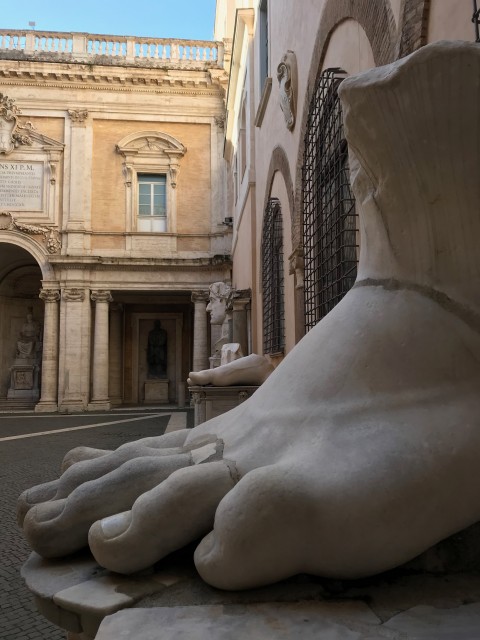
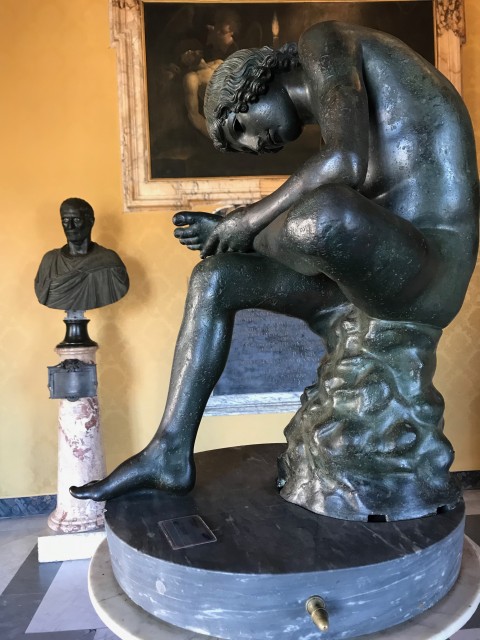
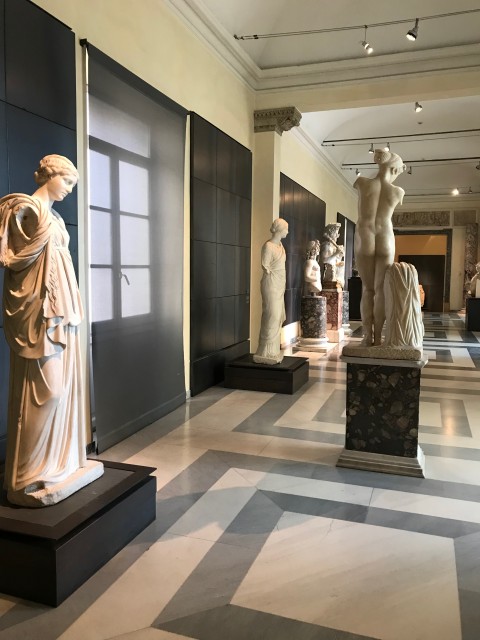
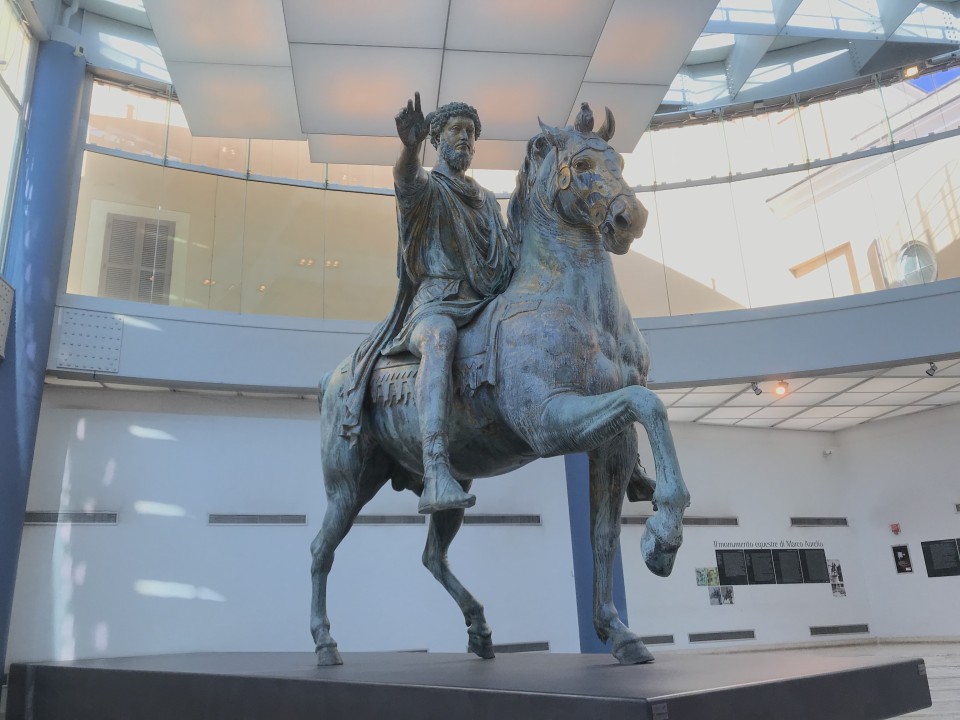
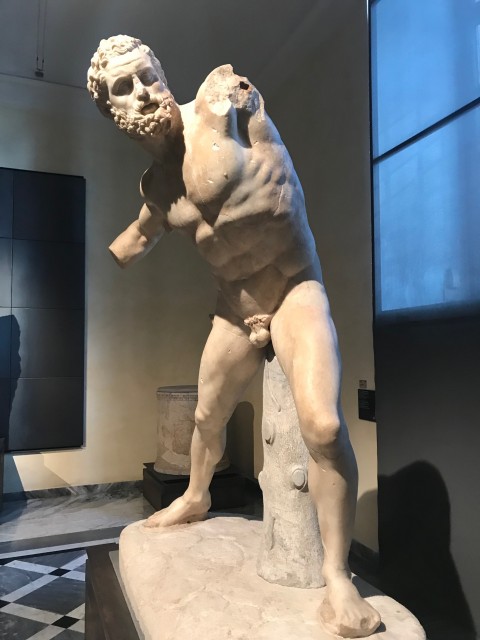
Our walk will then procede towards what is considered the first museum of the world. The Musei Capitolini were born in 1471, when Sixtus IV, the Pope who started the project of the Sistine Chapel, donated a collection of bronze statues to the citizens. Among them the statues of the Shewolf with the two twins Romulus and Remus and the equestrian statue of Marcus Aurelius.
Additional info and suggestions
Tours don't run for site closure on January 1, May 1, December 25